Real estate insurance in Florida: why agents and brokers face unique risks
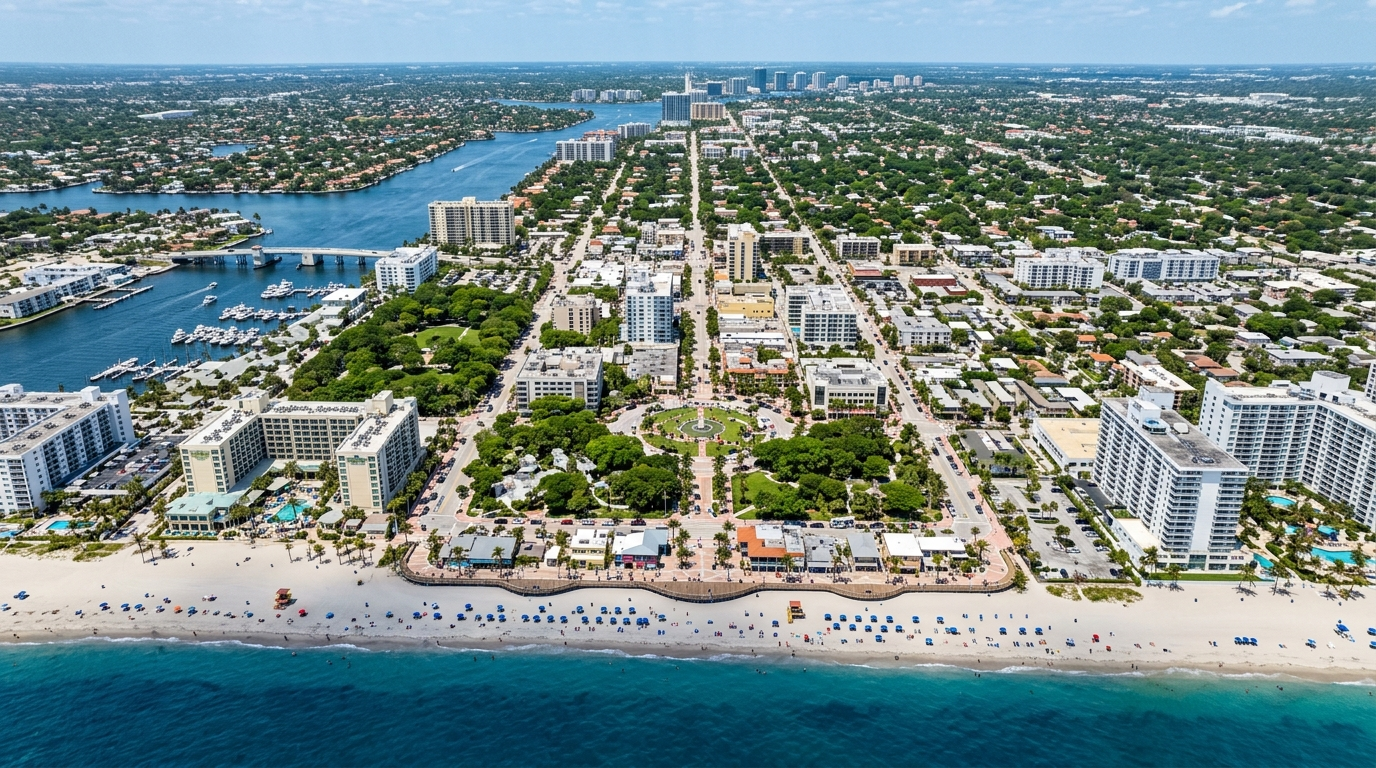
Real estate insurance in Florida is not a one-size-fits-all product, and if you work in this industry, you already know the state plays by its own rules. Florida is one of the most active real estate markets in the country, with South Florida alone seeing billions in residential and commercial transactions every year. That activity creates exposure. A real estate agent, broker, property manager, or investor operating without the right coverage is one lawsuit, one storm, or one data breach away from a serious financial problem. This post covers exactly what coverage you need, why Florida's environment makes each piece more important, and how to build a policy package that protects your livelihood.
Who needs real estate professional insurance in Florida
The term "real estate professional" covers a lot of ground. The coverage needs for a solo agent differ from those of a brokerage with 20 agents on staff, and both differ from a property management company or a real estate investor holding rental units in Broward County. Here is a breakdown by professional type:
- Licensed real estate agents and brokers need errors and omissions (E&O) coverage above all else, plus general liability if they host open houses or meet clients at a physical office.
- Real estate brokerages need E&O, general liability, commercial property coverage for the office, workers' compensation if they have employees, and often a cyber liability policy because of the volume of sensitive client financial data they handle.
- Property managers need E&O, general liability, and may need to be listed as an additional insured on the property owner's policy depending on the management agreement.
- Real estate investors with rental units need landlord insurance (also called dwelling fire or rental dwelling coverage), not homeowners insurance, because standard HO policies exclude tenant-occupied properties from many claims.
- Developers and flippers need builders risk insurance during construction phases, then a transition to commercial property or landlord coverage once the project is complete.
If you fall into more than one of these categories, you may need layered coverage that addresses each role separately. That is where working with an independent agency becomes genuinely useful.
Errors and omissions insurance: the core coverage for Florida real estate agents
Errors and omissions (E&O) insurance, sometimes called professional liability, is the policy that pays when a client claims your advice, a missed disclosure, or a transaction error caused them financial harm. In Florida's real estate market, this exposure is real and frequent.
Common E&O triggers in South Florida include:
- Flood zone misrepresentation. A buyer purchases a home you described as outside a FEMA special flood hazard area, then discovers after closing that flood insurance is required. Even if the error was an honest one, the buyer can sue.
- Failure to disclose. Florida Statute 475.278 and related case law impose significant disclosure obligations on licensees. Missing a material fact about a property's condition, history, or legal status can result in a claim.
- Contract errors. A date entered incorrectly on a purchase agreement, a contingency missed, or an addendum not properly executed can unwind a deal and trigger liability.
- Short-term rental restrictions. Selling a condo in a building with HOA rental restrictions without disclosing them has become a growing source of buyer complaints in markets like Fort Lauderdale, Hollywood, and Aventura.
E&O policies are typically written on a claims-made basis, meaning the policy in force when the claim is filed, not when the alleged error occurred, is the one that responds. This matters when switching carriers or retiring: you may need an extended reporting period (tail coverage) to stay protected for past work. You can learn more about how professional liability works for Florida service businesses at our professional liability insurance page.
Premium for a solo agent E&O policy in Florida typically runs between $800 and $2,500 per year , depending on transaction volume and coverage limits. Brokerages with multiple agents can expect considerably more, but the per-agent cost usually drops with scale.
General liability insurance for real estate professionals
General liability (GL) covers bodily injury and property damage claims that arise from your business operations, not from professional advice. The distinction is straightforward: E&O responds to "you gave me bad advice," while GL responds to "someone got hurt at your open house."
Real estate agents and brokers in Florida regularly host open houses, show vacant properties, and meet clients at office locations. Any of those activities creates slip-and-fall exposure. A visitor trips over a door threshold at a listing you are showing. A client spills coffee in your office and injures themselves trying to clean it up. These seem minor, but a single bodily injury claim in Florida can easily reach five figures before litigation costs enter the picture.
A standard GL policy provides $1 million per occurrence and $2 million aggregate as a baseline. Many brokerages and property management companies carry higher limits, especially if they manage properties where tenants could bring claims. Our general liability insurance page has more detail on how these limits apply in practice.
Landlord and rental property coverage: what Florida investors need to know
If you own rental properties in South Florida, whether a single-family home in Davie, a condo unit in Hallandale Beach, or a portfolio of multifamily buildings in Doral, a homeowners policy will not protect you the way you think it will. Most HO policies contain language that excludes or severely limits coverage when the home is rented to tenants on a regular basis.
What you actually need is landlord insurance, structured as a rental dwelling or dwelling fire policy. These policies are built for the realities of investment property ownership:
- Dwelling coverage pays to repair or rebuild the structure after a covered loss such as fire, windstorm, or vandalism.
- Liability coverage protects you if a tenant or their guest is injured on the property and sues you as the owner.
- Loss of rental income pays the rent you would have collected during repairs if a covered loss makes the property uninhabitable. This is sometimes called fair rental value coverage and is one of the most overlooked pieces of landlord protection.
- Tenant property exclusion. Standard landlord policies do not cover the tenant's belongings. That is what renters insurance is for. Some landlords in South Florida now require proof of renters insurance as a condition of the lease.
For short-term rental properties listed on Airbnb or VRBO in markets like Fort Lauderdale Beach or Hollywood, neither a homeowners policy nor a standard landlord policy will cover you adequately. Short-term rentals have their own coverage gaps that require a specific policy type. See our breakdown at landlord insurance Florida for more on how these distinctions play out for local investors.
Flood insurance: a non-negotiable for Florida real estate
South Florida is one of the most flood-prone regions in the United States. Miami-Dade, Broward, and Palm Beach counties all contain large areas within FEMA-designated Special Flood Hazard Areas, and many properties outside those zones still flood regularly because of South Florida's flat topography and seasonal rainfall patterns. Hurricane season runs June through November, and even storms that do not make direct landfall can dump enough rain to cause significant flood damage.
Standard commercial and landlord property insurance policies exclude flood damage entirely. Flood requires a separate policy, whether purchased through the National Flood Insurance Program (NFIP) or a private flood carrier. For real estate investors with properties in flood zones, this is not optional coverage. Lenders require it for federally backed loans in mapped flood zones, and even lender-required minimums are often not enough to cover full replacement cost.
For investors and property managers, a commercial flood policy may be more appropriate than an NFIP residential policy depending on the property type and number of units. Private flood carriers have become more active in Florida over the past few years and can sometimes offer higher limits and shorter waiting periods than the NFIP's standard 30-day wait. Our guide to commercial flood insurance for Florida businesses covers the key differences and what to ask when comparing options.
Cyber liability insurance for real estate brokerages
Real estate transactions involve an enormous amount of sensitive data: Social Security numbers, tax returns, bank statements, mortgage information, and wire transfer instructions. Brokerages, property management firms, and title-adjacent real estate businesses are prime targets for wire fraud and phishing schemes, and Florida consistently ranks among the top states for cybercrime losses.
Wire fraud in real estate is a specific and growing threat. A hacker intercepts an email thread between a buyer and their agent, then sends a spoofed email with fraudulent wire instructions for the closing. The buyer wires the funds to the fraudster. Once the money is gone, it is rarely recovered. Some E&O policies offer limited cyber endorsements, but a dedicated cyber liability policy provides far broader protection, including forensic investigation costs, notification expenses, regulatory defense, and social engineering fraud coverage.
For brokerages with more than a handful of agents, a standalone cyber policy is worth serious consideration. Premiums for small to midsize real estate businesses typically range from $500 to $3,000 per year depending on revenue, data volume, and security practices in place.
Workers' compensation requirements for brokerages in Florida
Florida law requires most employers with four or more employees (including part-time employees) to carry workers' compensation insurance. Real estate is a somewhat nuanced industry here because many agents operate as independent contractors rather than W-2 employees. However, that classification does not automatically remove the obligation to carry workers' comp, especially as brokerages grow and the contractor-versus-employee question becomes more complex under Florida law.
The Florida Division of Workers' Compensation enforces these requirements seriously, and penalties for non-compliance include stop-work orders and fines equal to twice the amount of premium that should have been paid. If you run a brokerage and are unsure how your agents are classified for workers' comp purposes, that conversation is worth having with an insurance professional before the state raises it for you. Our workers' compensation Florida guide covers the specific rules and how they apply to different business structures.
Building the right coverage package: working with an independent agent
One of the most common mistakes real estate professionals in South Florida make is buying each policy from a different source without anyone reviewing how the pieces fit together. The result is gaps where one policy's exclusion is not filled by another, or overlaps where you are paying for duplicated coverage that will never both respond to the same claim.
An independent insurance agency shops your coverage across multiple carriers rather than being limited to one company's products. For a real estate professional, that might mean placing your E&O with a carrier that specializes in professional liability for Florida licensees, your general liability and commercial property through a business owner's policy from a second carrier, and your flood coverage through a private flood insurer with better terms than the NFIP. No single carrier does everything best, and in Florida's current insurance market, having options matters.
The real estate industry page on our site at real estate insurance outlines the specific coverage lines we recommend for professionals in this space and how we approach building a custom program.
Get a real estate insurance review from Marker Insurance
Marker Insurance is an independent agency serving real estate professionals throughout South Florida, including Fort Lauderdale, Hollywood, Miramar, Aventura, Boca Raton, and the surrounding communities. Because we work with multiple carriers, we can compare options and build a coverage program designed around your specific role in the market, whether you are a solo agent, a growing brokerage, or a property investor with a multi-unit portfolio.
If you are not sure whether your current policies cover what you think they cover, that is exactly the conversation we are here to have. Real estate insurance in Florida is complicated, and the cost of a gap in coverage is almost always higher than the cost of filling it before something goes wrong.
Call us at (954) 456-7505 or request a quote online and we will review your current coverage, identify any gaps, and put together options that make sense for your business and your budget. No pressure, just a straight conversation from people who understand this market.