Liability insurance for Fort Lauderdale businesses: what you need to know
If you own or operate a business in Fort Lauderdale, liability insurance is not optional. One slip-and-fall at your Las Olas storefront, one client who claims your work caused them financial harm, one data breach at your Flagler Village office: any of these can trigger a lawsuit that costs tens of thousands of dollars before trial begins. This post breaks down the types of liability coverage that matter most for Fort Lauderdale businesses, what Florida law requires, and how to build a coverage program that actually protects you.
Why liability exposure is especially high in South Florida
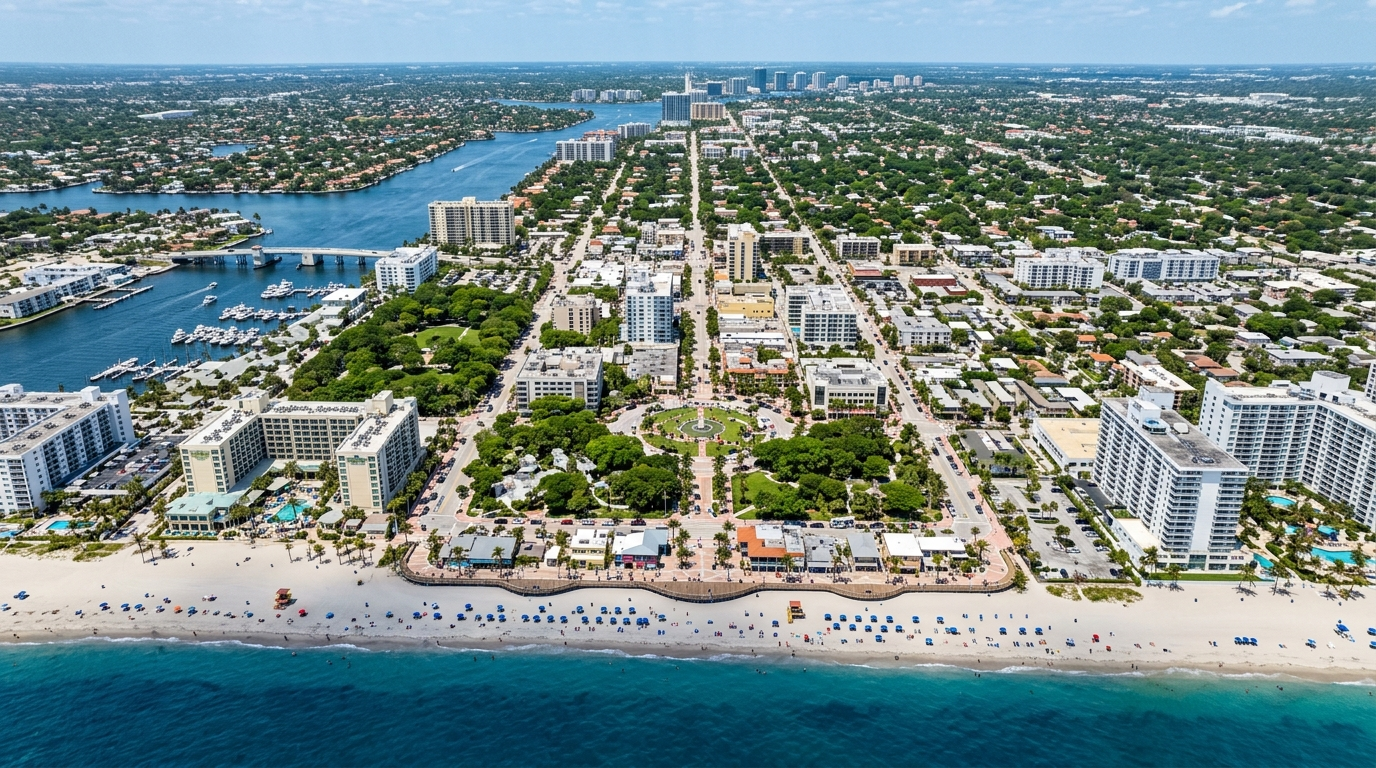
Fort Lauderdale sits in one of the most litigious markets in the country. Florida consistently ranks among the top states for lawsuit filings, and Broward County courts are no exception. Several local factors drive up liability risk for business owners here:
- Heavy foot traffic. Busy corridors like Las Olas Boulevard, the Riverwalk, and the beach strip mean more customers, more contractors, and more opportunity for someone to get hurt on your property.
- Tourism and seasonal visitors. Unfamiliar guests are more likely to have accidents, and out-of-state visitors sometimes bring attorneys home with them.
- Hurricane and storm damage overlap. Water intrusion after a storm can create slip hazards and property damage claims that blur the line between liability and property coverage.
- Active construction market. Fort Lauderdale's ongoing development means contractors, subcontractors, and property owners face elevated third-party liability exposure on job sites every day.
- High cost of medical care. South Florida's healthcare costs run above the national average, which pushes bodily injury claim payouts higher even in routine cases.
Understanding these local factors helps you choose the right coverage limits, not just the cheapest policy on the market.
Core liability coverages every Fort Lauderdale business should consider
General liability insurance
General liability (GL) is the foundation of any commercial insurance program. It covers third-party bodily injury, property damage, and personal and advertising injury claims arising from your business operations, products, or premises. A typical GL policy for a small Fort Lauderdale business carries a $1 million per-occurrence / $2 million aggregate limit, but businesses with high foot traffic or larger contracts often need more. Many commercial landlords and general contractors in Broward County require proof of GL coverage before you can sign a lease or get on a job. You can learn more about how this coverage works on the general liability insurance page, or read a deeper breakdown in this guide to general liability for Florida small businesses.
Professional liability (errors and omissions)
Professional liability insurance , also called errors and omissions (E&O), covers claims that your professional advice, services, or failure to perform caused a client financial harm. GL does not cover this. If you are a consultant, accountant, architect, real estate agent, or any service-based business, a client can sue you even when no one got physically hurt. Florida has no universal state law requiring E&O for most professions, but many industry licensing boards and client contracts do require it. Coverage limits typically start at $250,000 and go well above $1 million for larger firms. See the professional liability service page for more detail.
Commercial umbrella and excess liability
Even a solid GL policy can be exhausted by a serious claim. A commercial umbrella policy sits above your underlying GL, commercial auto, and employer's liability policies and pays once those limits are used up. For Fort Lauderdale businesses in hospitality, construction, or healthcare, umbrella limits of $1 million to $5 million are common. An excess liability policy works similarly but follows the terms of a single underlying policy. Both options are worth discussing if your business has significant asset exposure or contractual requirements for higher limits.
Liquor liability
Fort Lauderdale's restaurant and bar scene is active, and Florida's Dram Shop Act (Florida Statute 768.125) creates real exposure for businesses that sell or serve alcohol. If a customer becomes intoxicated at your establishment and injures a third party, your business can be held liable. Standard GL policies typically exclude or severely limit liquor-related claims. A separate liquor liability policy closes that gap. This coverage is required for bars, restaurants, event venues, and any business that hosts alcohol-serving events. Check out the full liquor liability insurance guide for Florida if this applies to your business.
Cyber liability
Cyber liability has moved from a specialty add-on to a near-essential coverage for most Fort Lauderdale businesses. If you store customer data, process credit cards, or use cloud-based software, a breach can expose you to notification costs, regulatory fines, and third-party claims from affected customers. Florida's Information Protection Act (FIPA) requires businesses to notify affected individuals within 30 days of a breach, and doing that correctly is expensive. Cyber liability coverage typically includes breach response, legal defense, and business interruption from a network outage.
Industry-specific liability risks in Fort Lauderdale
Contractors and construction
Fort Lauderdale's construction market has been active for years, from high-rise residential towers to commercial buildouts along Broward Boulevard. Contractors face third-party bodily injury exposure on job sites, completed operations claims after work is finished, and contractual liability requirements from general contractors and property owners. Florida also requires specific licensing bond coverage in some trade categories. If you work in the trades, you need GL with completed operations coverage, and depending on your scope of work, builders risk and professional liability as well. See how coverage comes together on the contractors insurance page.
Restaurants and food service
Between slip-and-fall exposure in the kitchen, food contamination claims, liquor liability, and employment practices claims, restaurants carry some of the broadest liability exposure of any business type. A busy Fort Lauderdale restaurant on a Friday night has dozens of moving pieces and numerous opportunities for something to go wrong. A business owner's policy (BOP) often bundles GL and property coverage at a favorable rate for smaller food service businesses, but higher-volume spots typically need standalone GL with liquor liability added. The restaurant insurance overview covers this in more detail.
Medical spas and aesthetics
Fort Lauderdale and the surrounding Broward County area have a high concentration of medical spas and aesthetics clinics. These businesses carry a specific professional liability exposure: if a treatment causes injury or a patient claims negligence, standard GL will not respond. Medical professional liability (also called malpractice insurance for med spas) is required for licensed practitioners and is increasingly expected by commercial landlords in medical office parks. This coverage is separate from GL and needs to be structured carefully given the licensing requirements for different services offered.
Real estate professionals
Whether you are a broker, property manager, or real estate investor, liability exposure comes from multiple directions: errors in transactions, fair housing claims, slip-and-fall incidents at managed properties, and wrongful eviction allegations. E&O for real estate professionals is separate from GL, and property managers often need both. Florida licensing rules also require real estate brokers to maintain certain coverage levels. The real estate insurance page outlines the coverage options for this industry.
Florida-specific rules that affect your liability coverage
A few Florida statutes are worth knowing before you finalize any liability program:
- Comparative fault rule. Florida uses a modified comparative fault system (as of 2023, under HB 837). A plaintiff can only recover damages if they are less than 51% at fault. This change made Florida somewhat less plaintiff-friendly than before, but litigation is still active and defense costs are still real.
- Statute of limitations changes. HB 837 also reduced the general negligence statute of limitations from four years to two years, effective March 2023. This affects how long past incidents can be brought into litigation.
- Workers' compensation requirements. Florida requires most construction businesses with one or more employees (including the owner) to carry workers' comp. Non-construction businesses with four or more employees must carry it as well. Workers' comp is not liability insurance, but it interacts with your GL when an injured worker attempts to sue a third party.
- No state requirement for commercial GL. Unlike auto insurance, Florida does not mandate that businesses carry general liability. That said, most commercial leases, professional licenses, and government contracts require it regardless.
How much does liability insurance cost for a Fort Lauderdale business?
Cost depends on your industry, revenue, payroll, square footage, number of employees, and claims history. General ranges for common policy types in the South Florida market:
- General liability (small business, low-risk): $500 to $1,500 per year for a retail or professional services business with modest revenue.
- General liability (contractor or higher risk): $1,500 to $5,000+ per year depending on trade type, subcontractor use, and job size.
- Professional liability / E&O: $800 to $3,000+ per year for most service businesses. Tech, medical, and financial services typically run higher.
- Liquor liability: $500 to $2,500 per year standalone, or added to a BOP or restaurant package.
- Commercial umbrella ($1M limit): $500 to $1,500 per year layered over existing underlying policies.
These are ballpark numbers. Fort Lauderdale businesses with waterfront locations, outdoor dining, live entertainment, or work on occupied buildings will typically see higher rates. The most reliable way to know your actual cost is to get competing quotes from multiple carriers, which is what an independent agency does for you.
Bundling liability with other commercial coverages
Most small and mid-sized Fort Lauderdale businesses do not need standalone policies for every coverage type. A Business Owner's Policy (BOP) combines GL, commercial property, and often business interruption coverage into a single policy at a lower combined rate than buying each piece separately. BOPs work well for businesses that operate out of a fixed location with moderate risk profiles: retail shops, professional offices, and small restaurants. Larger businesses or those with more complex operations often need to build their program policy by policy. If you have not looked at a BOP recently, the BOP page is a good starting point.
For businesses that regularly use vehicles for deliveries, client visits, or job-site travel, commercial auto liability should also be part of the conversation. Personal auto policies do not cover business use properly, and Florida's minimum auto liability requirements are not enough to protect a business from a serious accident. If that applies to you, the commercial auto insurance requirements are worth reviewing separately.
Get the right liability coverage from a Fort Lauderdale-area independent agent
Liability insurance for Fort Lauderdale businesses is not one-size-fits-all. The right program depends on your industry, how your business operates, what your contracts require, and how much exposure you are willing to retain. Getting that right means comparing actual carrier options, not accepting whatever a single insurer offers.
Marker Insurance is an independent insurance agency serving Fort Lauderdale and Broward County. Because we work with multiple carriers, we shop your coverage across the market and put together a program that fits your business. Whether you need a basic GL policy for a new LLC or a full commercial program with umbrella, professional liability, and cyber coverage, we can help you build it.
Call us at (954) 456-7505 or request a quote online to start the conversation. There is no obligation, and we will walk you through your options in plain language, not insurance jargon.