Airbnb insurance in Florida: why your homeowners policy leaves you exposed
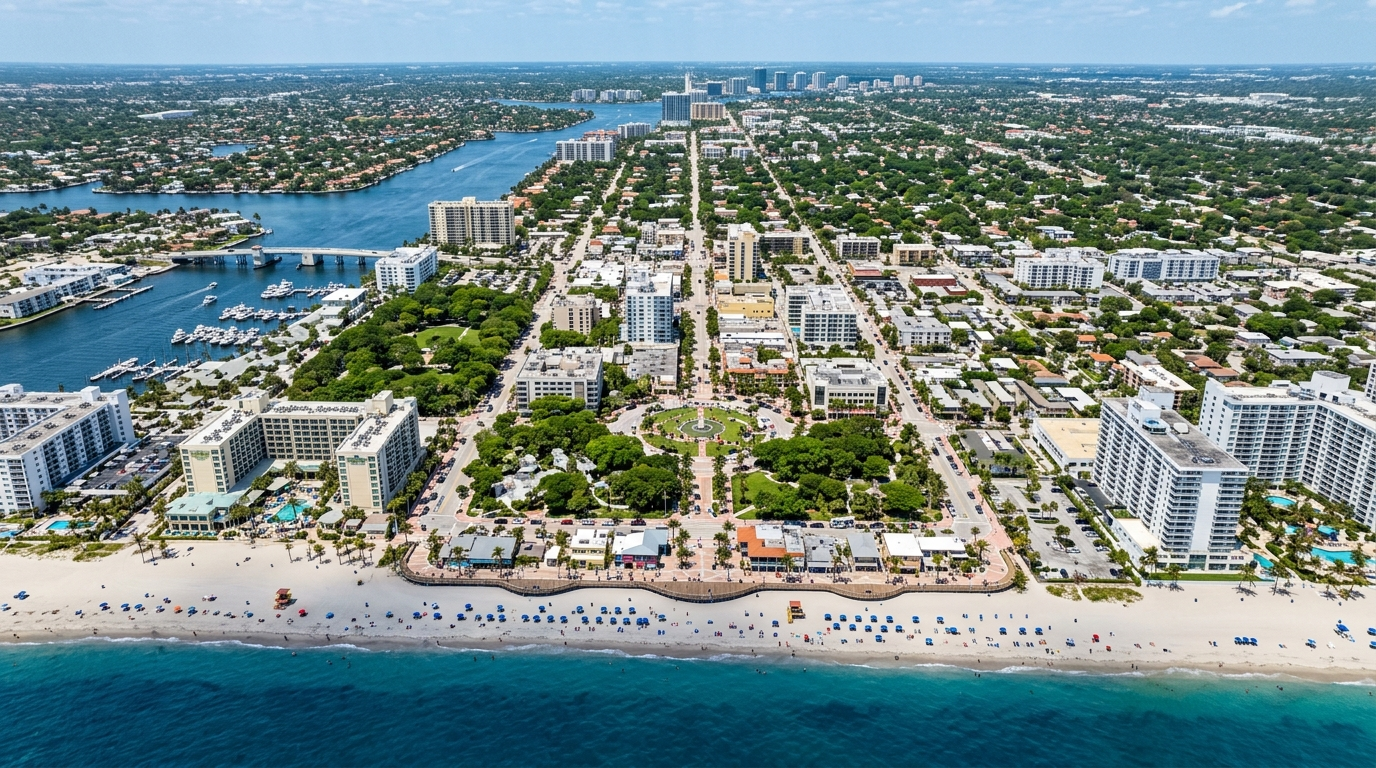
Florida is one of the most active short-term rental markets in the country. From Fort Lauderdale beachfront condos to Miami Gardens vacation homes, hosts across South Florida are earning real income through Airbnb and VRBO. But if you're renting your property to guests and counting on your standard homeowners policy to protect you, you have a serious coverage gap that could cost you tens of thousands of dollars. Airbnb insurance in Florida is not the same as regular homeowners coverage, and most hosts don't find that out until after a claim is denied.
What your standard homeowners policy actually covers
A standard Florida homeowners policy is written for owner-occupied residences. It covers your structure, your personal belongings, and your personal liability. What it does not cover is anything that happens in the course of running a business, and in the eyes of almost every carrier, renting your home to strangers for money is a business activity.
Most homeowners policies include language that voids or limits coverage the moment you start collecting rental income, even for a single weekend. A few specific exclusions to watch for:
- Business activity exclusion: any loss arising from a business conducted on the premises may be excluded entirely, which includes short-term rental income activity.
- Rental property exclusion: some policies exclude liability claims that occur while the home is rented out to others, even if you live there the rest of the year.
- Guest theft: personal property taken by a paying guest often does not qualify as "theft" under a standard policy because the guest had permissioned access.
- Intentional or deliberate damage by guests: some carriers treat this as a separate category that standard property coverage will not address.
Florida's homeowners market is already under enormous pressure from carriers reducing or restricting coverage. Adding an undisclosed rental use on top of that creates grounds for a carrier to deny your claim or, worse, cancel your policy entirely.
What Airbnb's "AirCover" actually does and doesn't do
Airbnb offers hosts a program called AirCover, which they describe as providing up to $3 million in damage protection and $1 million in liability coverage. On the surface, that sounds substantial. In practice, there are real limitations Florida hosts need to understand before treating AirCover as their only safety net.
AirCover is a guarantee program run by Airbnb, not an insurance policy issued by a licensed carrier. That distinction matters for several reasons:
- It covers guest-caused damage only: losses unrelated to a specific guest stay, like a roof leak during a vacancy period between bookings, are not covered.
- Claims go through Airbnb's own process: you are not dealing with an insurance adjuster bound by Florida's insurance fair claims standards. Disputes can be difficult to resolve.
- Liability limits may not be enough: a guest who suffers a serious injury at your property and pursues a lawsuit in Florida can seek damages that exceed $1 million, especially if long-term medical costs are involved.
- Loss of rental income is not covered: if a covered event forces you to cancel upcoming bookings, AirCover does not replace that income.
- Your personal belongings may be capped or excluded: AirCover focuses on the structure and guest-caused property damage, not your valuables or personal items throughout the home.
VRBO and other platforms offer similar programs with comparable limitations. None of them are a substitute for a proper insurance policy.
The right insurance options for Florida short-term rental hosts
The market for short-term rental insurance in Florida has grown significantly. Hosts now have real choices between several distinct coverage approaches, and the right one depends on how often you rent, whether you also live in the home, and how your property is structured.
Short-term rental endorsement on an existing homeowners policy
Some carriers will add a short-term rental endorsement to an existing homeowners policy. This typically extends liability and property coverage to apply during guest stays for a modest additional premium. Not all Florida carriers offer this, and it tends to work best for hosts who rent infrequently, such as a few weeks per year during peak season. If you are renting more than 90 days per year, you will likely need a more robust solution.
Dedicated short-term rental policies
Several specialty carriers now write policies designed from the ground up for short-term rental properties. These policies typically include:
- Property coverage during both occupied and vacant periods between bookings
- Liability coverage for guest injuries, including legal defense costs
- Loss of rental income if the property is damaged and bookings have to be canceled
- Theft by guests , which is often excluded on standard homeowners policies
- Bed bug coverage and other hospitality-specific perils
These policies are often placed through surplus lines carriers, which are legal and regulated in Florida but work through a different distribution channel than standard admitted carriers. An independent agent can access those markets directly.
Landlord or dwelling fire policy with a rental rider
If the property is primarily a rental and you do not live there yourself, a landlord insurance policy or dwelling fire policy may be more appropriate. These are built for non-owner-occupied properties and typically cover the structure, liability, and rental income loss. They can sometimes be adapted for short-term use with the right endorsements. You can read more about the broader considerations on the short-term rental insurance page.
Florida-specific risks that make the coverage gap worse
Florida's geography and weather create risks that raise the stakes for short-term rental hosts beyond what hosts in other states face.
Hurricane and windstorm exposure
South Florida sits squarely in hurricane territory. A named storm can destroy a rental property and wipe out months of booking income at the same time. Standard homeowners policies in Florida often carry separate wind/hail deductibles, sometimes 2% to 5% of the dwelling value. On a $400,000 home, that's an $8,000 to $20,000 out-of-pocket exposure before any coverage applies. A short-term rental policy that includes loss of income can help bridge the gap while repairs are made and bookings resume.
Flood risk
Many of the most popular Airbnb and VRBO markets in South Florida, including beachfront areas in Hollywood and Hallandale Beach, sit in FEMA flood zones. Neither your homeowners policy nor Airbnb's AirCover provides flood coverage. You need a separate flood policy, either through the National Flood Insurance Program or a private carrier. You can find a deeper breakdown in our Florida flood insurance guide.
Liability exposure from guest injuries
Florida attracts families, retirees, and international travelers. Pools, balconies, and outdoor spaces that draw guests also create above-average injury liability. Florida courts have a long history of substantial personal injury verdicts. A $1 million liability limit may sound like a lot until you consider what a slip-and-fall with a serious spinal injury can cost in a Florida courtroom.
Increased vacancy between bookings
Standard homeowners policies often include vacancy clauses that limit or void coverage after a property has been unoccupied for 30 to 60 days. Short-term rental properties frequently sit vacant between bookings, especially in the off-season. A dedicated short-term rental policy addresses this by explicitly covering both occupied and unoccupied periods.
Common misconceptions Florida hosts have about their coverage
A few misunderstandings come up repeatedly when hosts in South Florida talk to agents about their situation for the first time.
- "I only rent a few times a year, so I'm probably fine": frequency does not determine coverage. Even a single paid booking can trigger the business activity exclusion in your homeowners policy if a loss occurs during that stay.
- "My agent knows I rent it out": verbal disclosure is not the same as a written endorsement. If the policy language excludes rental activity and you do not have a formal endorsement adding it back in, you are still exposed.
- "VRBO handles the insurance side": VRBO's host guarantee program has the same structural limitations as Airbnb's AirCover. It is not an insurance policy and does not replace one.
- "My umbrella policy will cover it": most personal umbrella policies follow the form of your underlying homeowners policy. If your homeowners policy excludes the loss, the umbrella will too. You would need a commercial or specialty umbrella to extend coverage over a short-term rental operation.
What to look for when comparing short-term rental policies
Not all short-term rental policies are built the same. When comparing options, pay attention to these specifics:
- Rental income coverage: how many months of lost income does the policy cover, and is there a waiting period before it kicks in?
- Guest theft sublimits: what is the maximum payout for theft by a guest, and does it cover electronics, jewelry, and appliances?
- Liability limit and defense costs: is the liability limit eroded by defense costs, or are legal fees covered separately on top of the limit?
- Windstorm deductible structure: in Florida, this is not optional fine print. Know your deductible before a storm hits.
- Claims handling reputation: if the policy is through a surplus lines carrier, research their claims history. A policy that doesn't pay is not worth the premium.
This is exactly the kind of comparison an independent agent can do for you across multiple carriers at once, something a direct-to-consumer platform or a single-carrier agent cannot offer.
Get the right coverage before your next guest checks in
Marker Insurance is an independent agency serving hosts across South Florida, including Fort Lauderdale, Hollywood, Hallandale Beach, Pompano Beach, and the surrounding area. Because we work with multiple carriers, we can compare your options for Airbnb insurance in Florida side by side and find a policy that fits how you actually use your property, not a one-size-fits-all solution.
If you are currently renting your home or condo through Airbnb or VRBO and have not reviewed your insurance coverage recently, now is the time to do it. The gap between what you think is covered and what is actually covered can be significant, and finding out at claim time is the worst possible moment.
Call us at (954) 456-7505 or reach out through our contact page to talk through your situation with one of our agents. There is no pressure and no commitment. We just want to make sure you are protected before your next guest arrives.