Hurricane season is here. Get a practical South Florida prep guide from Marker Insurance, plus a free downloadable checklist to protect your home and family.
Hurricane season runs from June 1 through November 30, and if you live in South Florida, you already know it is not a question of if a storm comes, but when. The homeowners who get through a hurricane with the least stress are not the lucky ones. They are the ones who prepared early, before a name was on the map and before the shelves at the store were empty.
This guide walks you through what actually matters: reviewing your coverage, building a real emergency kit, protecting your property, and making a plan your whole family understands. At the end, you can download our free Hurricane Preparedness Checklist to keep on your fridge.
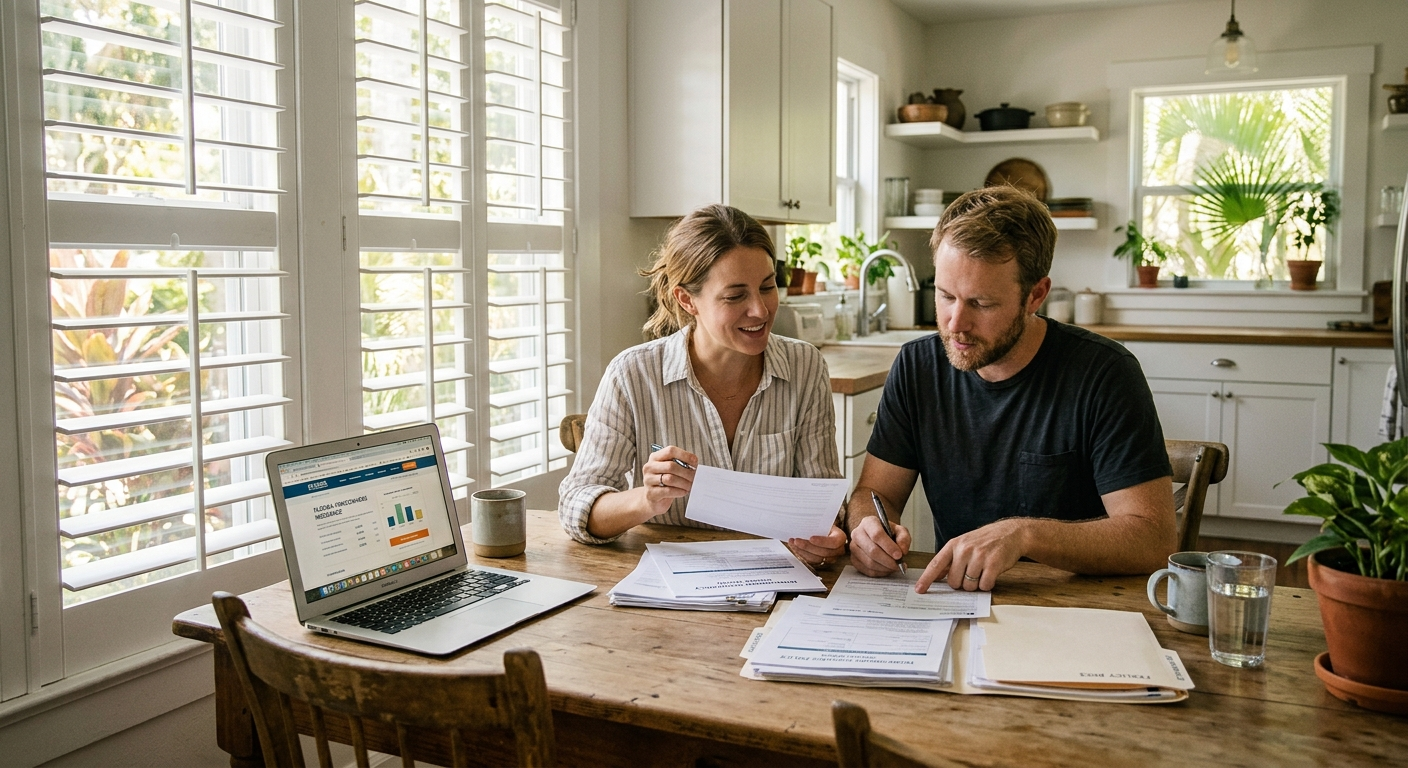
Start with your insurance, before the storm has a name
Here is something most people learn the hard way: once a storm enters a certain distance from Florida, insurers stop writing or changing policies. That window can close days before landfall. If you wait until a hurricane is in the forecast to review your coverage, it is already too late to fix any gaps.
A few things to confirm now:
- Know your coverage limits: Pull out your homeowners policy and check what it actually covers and for how much. Replacement costs in South Florida have climbed, and a limit that made sense a few years ago may leave you underinsured today.
- Understand your hurricane deductible. Florida policies carry a separate hurricane deductible, usually 2 to 5 percent of your home's insured value, not a flat dollar amount. On a $400,000 home, a 2 percent deductible means $8,000 out of pocket before coverage kicks in. Know your number now.
- Check whether you have flood coverage. This is the big one. A standard homeowners policy does not cover flooding, and storm surge and heavy rain are exactly how hurricanes do their damage. If you are unsure whether you are covered, read our Florida flood insurance guide and call us. Flood policies also have a waiting period, so this cannot wait.
- Document everything. Walk through your home with your phone and take photos or video of every room, your belongings, and any high-value items. Store the files in the cloud so you have them even if your phone does not survive. This makes a claim far smoother if you ever need to file one.
Build an emergency kit that actually lasts
Plan for at least three days without power, water, or a trip to the store. Your kit should include:
- Water, one gallon per person per day
- Non-perishable food and a manual can opener
- Flashlights and extra batteries
- A first-aid kit and a full supply of any medications
- Phone chargers and a backup power bank
- Cash in small bills, since ATMs and card readers go down with the power
- Copies of your important documents in a waterproof bag
Protect your property
Most storm damage prep is straightforward, but it takes time you will not have once a warning is issued:
- Trim trees and remove loose or dead branches that could become projectiles
- Clear your gutters and drains so water flows away from your home
- Bring in or tie down outdoor furniture, grills, and anything that can fly
- Install storm shutters or pre-cut plywood for your windows
- Learn where and how to shut off your water, gas, and electricity
Make a plan your whole family knows
When a storm hits, everyone should already know the plan. Agree on an evacuation route and a meeting place. Pick a safe interior room away from windows. Plan for your pets, including food, carriers, and which shelters are pet-friendly. Then make sure every person in the household actually knows it, not just you.
Download your free Hurricane Preparedness Checklist
We put everything above into a simple, printable checklist you can stick on your fridge and work through at your own pace. [Download the Hurricane Preparedness Checklist here.]
Let's make sure you're covered before the next storm
At Marker Insurance, we are an independent agency right here in Hollywood, which means we compare coverage and pricing across multiple carriers to find what truly fits your home and your budget. The best time to review your coverage is now, on a calm day, not when a storm is bearing down on us.
Call us at
(954) 456-7505 or visit our
contact page to review your policy or request a quote. A little preparation now is the difference between a stressful season and a safe one.